


Science & Technology
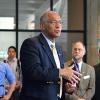 <p>Rounding out a full day of touring CU-Boulder facilities and meeting with faculty, staff and students, NASA Administrator Charles Bolden spoke to a packed house on the afternoon of April 18, 2014.</p>
<p>Bolden acknowledged the close association CU-Boulder has with the space program, calling the university a “pipeline for talent.”</p> <p>A deployable fire hose stand designed for the Longmont Fire Department and a heat-resistant mask designed to protect firefighters and fire victims from poisonous fumes will be among more than 90 student inventions showcased at the University of Colorado Boulder’s Engineering Design Expo on Saturday, April 26.</p>
<p>The event, which is free and open to the public, will feature a wide range of student-built devices including adaptive technology for people with disabilities, Rube Goldberg machines and even hovercrafts.</p> <p>Professor Robert S. Anderson of the University of Colorado Boulder’s geological sciences department and Institute of Arctic and Alpine Research has been awarded the 2014 Hazel Barnes Prize, the most distinguished award a faculty member can receive from the university.</p>
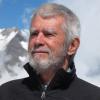 <p>The Office of the Vice Chancellor for Research is pleased to announce that Professor Peter Molnar of the Cooperative Institute for Research in Environmental Sciences and the Department of Geological Sciences has been selected as the 2014 Distinguished Research Lecturer.</p>
- <p>The Rocky Mountain Lighting Academy (RMLA) will offer a one-of-a-kind immersive educational opportunity for lighting professionals this summer at the University of Colorado Boulder.</p>
<p>The RMLA’s Summer Lighting Course is scheduled for June 23-27 on the CU-Boulder campus. The course will present the theory of lighting within a practical context, making it directly applicable to the needs of those working in engineering, product development and technical sales positions.</p> 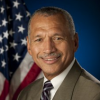 <p>NASA Administrator Charles Bolden will give a free public talk at the University of Colorado Boulder April 18 on America’s space program and the challenges and opportunities the space agency will encounter as it moves through the 21st century.</p>
<p>The talk, titled “NASA’s Roadmap to Tomorrow’s Missions,” will be held at CU-Boulder’s East Stadium Club on the east side of Folsom Field from 2:45 to 3:30 p.m. The presentation will be followed by a question-and-answer session with the audience.</p> <p>On most nights, <a href="http://tomyeh.info/about.html" target="_blank">Tom Yeh</a> puts his 3-year-old son on his lap, opens a children's book and reads aloud. It's a much-loved activity for both father and son as the characters are brought to life.</p>
<p>A year ago, while reading the children's classic <em>Goodnight Moon</em>, Yeh, an assistant professor in computer science, began thinking about how to make books more accessible to visually impaired preschool-age children.</p>- <p>The University of Colorado Boulder today announced the hiring of Timothy Orr as producing artistic director of the Colorado Shakespeare Festival.</p>
<p>Orr has been serving as interim director since February 2013 and was hired at the conclusion of a nationwide search for a permanent director.</p>
<p>Orr has been with the Colorado Shakespeare Festival as a performer since 2007 and joined the staff as the associate producing director in 2011. </p> - <p>A record number of University of Colorado Boulder students have received a prestigious National Science Foundation Graduate Research Fellowship, which recognizes outstanding graduate students in the science, technology, engineering and mathematics (STEM) fields.</p>
- <p>Members of the business community are invited to attend AeroSpace Ventures Day on April 17 at the University of Colorado Boulder.</p>
<p>The all-day event offers aerospace industry technologists, scientists and managers a chance to connect with 24 CU-Boulder faculty members and to learn about technological and scientific advances with applications ranging from human space exploration to climate and weather. Corporate recruiters and hiring managers also are invited to meet with the 140 undergraduate and graduate engineering students who have registered for the event.</p>