


Science & Technology
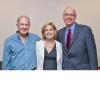 <p>Longtime Boulder resident Paul N. Eklund has made a transformative gift to the opera program at the College of Music at the University of Colorado Boulder that, combined with additional university commitments, establishes a $2 million endowment for the program, to be renamed the Eklund Family Opera Program in honor of the gift.</p>
- <p>NASA’s newest orbiter at Mars, MAVEN, took precautions to avoid harm from a dust-spewing comet that flew near Mars yesterday and is studying the flyby’s effects on the Red Planet’s atmosphere, according to University of Colorado Boulder Professor Bruce Jakosky, principal investigator on the mission.</p>
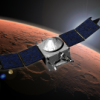 <p>NASA’s MAVEN spacecraft has provided scientists their first look at a storm of energetic solar particles at Mars and produced unprecedented ultraviolet images of the tenuous oxygen, hydrogen and carbon coronas surrounding the Red Planet, said University of Colorado Boulder Professor Bruce Jakosky, the mission’s principal investigator.</p>
- <p>A team of scientists including a University of Colorado Boulder professor used NASA’s Hubble Space Telescope to make the most detailed global map yet of the glow from a giant, oddball planet orbiting another star, an object twice as massive as Jupiter and hot enough to melt steel.</p>
 <p>University of Colorado Boulder Associate Professor Amy Palmer of the BioFrontiers Institute was awarded a coveted Director’s Pioneer Award from the National Institutes of Health this week, a five-year, $3.7 million grant made to select researchers showing exceptional creativity in solving pressing biomedical and behavioral research problems.</p>
 <p>NASA has awarded a team led by the University of Colorado Boulder more than $7 million to study aspects of the origins, evolution, distribution and future of life in the universe.</p>
- <p><span>A novel dental restorative material that should make life easier for dental care experts and their patients, which is based on technology developed by a team of University of Colorado Boulder engineers, was unveiled Oct. 1 by the 3M Company.</span></p>
 <p>Soil microbes that thrive in the deserts, rainforests, prairies and forests of the world can also be found living beneath New York City’s Central Park, according to a surprising new study led by Colorado State University and the University of Colorado Boulder.</p>
<p>The research team analyzed 596 soil samples collected from across Central Park’s 843 acres and discovered a stunning diversity of below-ground life, most of which had never been documented before.</p>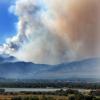 <p>The perception that Colorado’s Front Range wildfires are becoming increasingly severe does not hold much water scientifically, according to a massive new study led by the University of Colorado Boulder and Humboldt State University in Arcata, Calif.</p>
- <p>A new study led by the University of Colorado Boulder found that different strategies used by states to reduce power plant emissions -- direct ones such as emission caps and indirect ones like encouraging renewable energy -- are both effective. The study is the first analysis of its kind.</p>