


News Headlines
 When Taylor Howard dove into research on Sister Mary Dominic Ray, she was expecting to find the nun's biography, books she annotated or articles she wrote. Instead, she unlocked a highly varied collection of documents that left Sister Mary a mystery.
 Climate change is increasing sulfate runoff, likely causing soil microbes to produce the most toxic form of mercury.
 Finance expert Nathalie Moyen explains why the U.S. losing its top-tier credit rating is more than a symbolic shift — and how it could impact borrowing, savings and government spending.
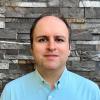 Ramin Ayanzadeh's research focuses on trustworthy quantum computing to enhance the reliability and security of quantum systems. To his knowledge, he's the only faculty member in the region who focuses on quantum software, systems and the architecture of quantum computers.
 In an acclaimed new novel, CU Boulder Professor Stephen Graham Jones explores ideas of "what an Indian is or isn’t."
 A CIRES and CU Boulder-led team detected tsunami waves caused by a landslide using satellite data from a ship for the first time, demonstrating the potential for the approach to improve tsunami detection and warning in coastal communities.
 CU Boulder philosopher Iskra Fileva argues that the present time is one of great achievements without outstanding achievers.
 Robert Francis Prevost has attributed the rise of artificial intelligence as the reason for his chosen papal name Leo XIV—a tribute to Pope Leo XIII, who served amid the Industrial Revolution, another time of radical technological change. Read from CU expert Nathan Schneider on The Conversation.
 Tariffs may hit prices for toys and clothes, but your travel costs are likely safe. Finance professor Edward Van Wesep explains why.
 Within our lifetimes, it could be common for people to interact with life-like digital avatars of the dead. New research explores their promise and peril.