


Climate & Environment
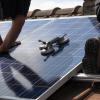 With a focus on building a green economy that benefits all community members, the city of Boulder's climate plan includes a roadmap to advance social justice in the transition to renewable energy. The focus on social justice emerged from community input into the draft climate plan, facilitated by CU Boulder's Just Transition Collaborative and partner organizations.
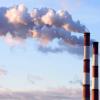 Increasing the efficiency of power plants’ efficiency is often assumed to be an effective means of reducing carbon emissions. However, an empirical analysis of plants’ efficiency and emission led by a University of Colorado Boulder sociology professor casts some doubt on that conventional wisdom.
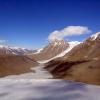 Scientists and students working with the National Science Foundation, including Associate Professor Michael Gooseff of environmental engineering and INSTAAR, have authored a series of papers on how a single season of intense melting in Antarctica in 2001-02 may affect the continent’s ecological future, including its potential impact on global climate change.
 Methane emissions from global fossil fuel development are up to 60 percent greater than previous estimates, according to a new study.
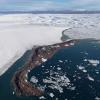 Previous estimates of ice mass loss from the Greenland Ice Sheet—already known to be shrinking—may be underestimates, according to a new study co-authored by CU Boulder researchers. Photo credit: Greenland's Zachariæ Isbræ, Anders A. Bjørk
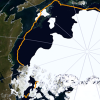 The Arctic’s ice cover appears to have reached its minimum extent on September 10, 2016, according to scientists at the National Snow and Ice Data Center (NSIDC), part of CIRES and the University of Colorado Boulder.
 The Arctic is nearing its seasonal sea ice minimum this month, but predicting exactly when the region will see its first ice-free summer may be more difficult than previously believed.
 While the earthquake that rumbled below Colorado’s eastern plains May 31, 2014, did no major damage, its occurrence surprised both Greeley residents and local seismologists. To some Greeley residents, the magnitude-3.2 earthquake felt like a large truck hitting the house.
 It’s August and that means the hottest show in the night sky, the Perseid meteor shower, will make it annual appearance – peaking in the pre-dawn hours tonight through Aug. 13.
 Through CU Boulder's Office of Industry Collaboration, entrepreneur Bart Foster has teamed up with members of the campus community to look into an optical solution, how to recycle the byproduct of eyeglass lenses. Made out of three or more types of plastic, currently several tons of the material are dumped into landfills each year.