


Nicholas Goda
 An instrument designed and built in Colorado will measure how much energy leaves Earth on a daily basis—shaping processes that sustain life from wind and weather to ocean currents and more.
 Fairies and dragons and love! Oh my! An expert on romance fiction digs into one of the publishing industry's hottest trends.
 For astronauts, coming back to Earth is one of the most dangerous parts of any mission. A new research facility addresses that challenge by creating streams of gas that flow at thousands of miles per hour and burn at temperatures of thousands of degrees Fahrenheit.
 Plus testing atomic clocks at 14,000 feet, AI ghosts and a new kind of "Band-Aid" for healing wounds
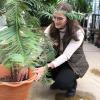 CU Boulder alumni Judy and Rod McKeever donated a tree—once considered extinct—to the Department of Ecology and Evolutionary Biology greenhouse, giving students a living example of modern conservation.
 A first-of-its-kind clinical trial is looking at whether the non-intoxicating compound cannabidiol (CBD) can help high-potency cannabis users with an unhealthy dependence to cut back or quit.
 CU researchers are setting fires inside wind tunnels to gain a better understanding of how fire spreads across different terrain.
 Engineers at CU Boulder are developing new sensors that could one day help save farmers money, while reducing the environmental toll of agriculture.
 People in Colorado and across the United States saw glowing skies this week as a powerful solar storm shook Earth's atmosphere.
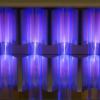 Ultraviolet light can disable airborne allergens within 30 minutes, according to a new study. The findings could lead to new portable devices to prevent allergies or new systems to provide relief from allergens in workplaces and other public spaces.