

Late Intermediate
 "Playground" by Mary Watkins begins with a waltz-like feel, accompanied by a playful, wandering melody. The piece moves quite fast, and features many unexpected, yet still consonant harmonies. The left-hand chordal rhythms feature clustered jazz
 Philippa Schuyler’s music reflects a blend of Romantic aesthetics and global influences drawn from her extensive travels. Her compositional style is characterized by lyrical, melody-driven writing, often conveying emotional immediacy and poetic
- Mary Watkins’s Ancient Visions (1997) is an expressive and rhythmically driven work for solo piano that suggests modal and Middle Eastern-inspired musical elements. The piece opens with a steady, repeating pattern in the left hand
- Mirrors, by Mary D. Watkins, is a dreamlike and meditative piece for solo piano. The left hand plays a repeated triplet eighth note figure for the entire piece, endlessly cascading like gentle waves upon a shore. The right hand
- Schuyler’s “Wanchai Road” is mysterious, spontaneous, and chaotic, reflecting the actual Wanchai Road in Hong Kong. It is reminiscent of beeping cars and tramways with a relentlessly consistent left hand rhythm, while the right
 The T’Chaka Suite is a set of three dances published in 1927, named after the Zulu king Shaka, who ruled parts of modern-day South Africa from 1816-1828. All three dances contain a strong rhythmic drive and use of open
 “Song Without Words (Pleading)”, by Florence Price, is a standalone piece published in A Second Album of Piano Pieces sold by Kicks Music. Each piece in the album reveals different facets of Price’s creative personality.for piano
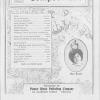 “Wild Flowers” is a late intermediate piano piece by composer Ida M. Larkins, and was first published in 1905 by the Pioneer Music Publishing Company in Chicago. It is a waltz with quite a bit of repeated material
 "Little Melody in E-flat major" is a standalone piece published in An Album of Piano Pieces sold by Kicks Music. Each piece in the album reveals different facets of Price’s creative personality. "Little Melody," written in a
 Blaize is a short, two-minute piece written by Zenobia Powell Perry in 1985. A rhythmic and muscular piece, it sounds very chromatic, and almost never lands on a cadence until the very last measure. It is built mostly