

About
Welcome to the Bortz-Dukic Group in the Department of Applied Mathematics at the University of Colorado Boulder. We develop weak-form methods for learning mathematical models from data. Our work spans discovering governing equations, estimating parameters and their uncertainty, and building reduced models of complex systems, with applications across the sciences.
We're looking to hire up to 2 postdocs to start in Fall 2027. Please apply here.
Group Leaders
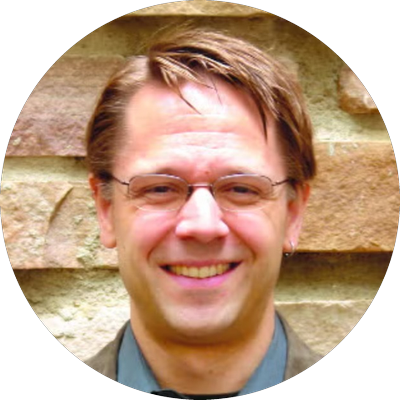
David Bortz
Professor of Applied Mathematics
Courtesy Professor of Computer Science
David is an applied mathematician. In our group he works on the development and analysis of weak-form methods and on applications across biology and the physical sciences.

Vanja Dukic
Professor of Applied Mathematics
Courtesy Professor of Economics
Vanja is a statistician whose work centers on inference and uncertainty quantification for weak-form methods. She leads many of the group’s collaborations in ecology and the environment.
Research Areas

WSINDy recovers interpretable ODE and PDE models from noisy data by combining the weak form with sparse regression.

WENDy estimates model parameters without repeatedly solving the differential equation.

Bias, confidence interval coverage, and practical identifiability for weak-form estimators.

Test function selection and weak form statistical theory.

Mean-field, homogenized, and reduced Hamiltonian models learned from particle data.

Weak-form latent space dynamics identification for fast, noise-robust surrogate models.

Population dynamics, insect outbreaks and movement, cell interactions, and structured populations.

Atmospheric science, plasma physics and MHD, turbulent flows, and ultracold atomic gases.

Weak-form equation learning: evaluate candidate features on noisy data, convolve them with a smooth test function and its derivatives, and identify the governing equation as a sparse combination of the resulting terms. Figure from D. A. Messenger, A. Tran, V. Dukic, and D. M. Bortz, “The Weak Form Is Stronger Than You Think,” SIAM News, October 2024.
News
October 2026
SIAM News covers our weak-form short course at the 2026 SIAM Annual Meeting
David Bortz and Daniel Messenger taught a full-day short course on weak-form methods at the 2026 SIAM Annual Meeting in Cleveland. About 50 participants worked through the theory and hands-on WSINDy and WENDy demos.
July 2026
David Bortz awarded Department of Energy Genesis Mission grant
A $750,000 Department of Energy award supports weak-form digital twins for real-time control of fusion plasmas. The project is a collaboration with Oak Ridge, Los Alamos, and Michigan State.
May 2026
April Tran awarded J. H. Wilkinson Postdoctoral Fellowship
April completed her PhD in our group and will continue her weak-form research at Argonne National Laboratory, where she is interested in applying it to digital twins.
September 2025
Eos highlights our work on interpretable atmospheric models
An AGU Eos Research Spotlight featured our work using WSINDy to learn interpretable atmospheric models. The method recovered known atmospheric physics from both simulations and real weather data.
October 2024
“The Weak Form Is Stronger Than You Think” published in SIAM News
Our SIAM News article surveys the history of weak-form methods and recent advances in equation learning, parameter estimation, and coarse graining.
October 2023
David Bortz receives $1.88 million NIH MIRA grant
The award supports developing weak-form methods for noisy biomedical data, with applications to wound healing and infectious disease forecasting.
July 2023
Daniel Messenger selected for the Heidelberg Laureate Forum
Dan was one of 200 young researchers selected to attend the 10th Heidelberg Laureate Forum and meet leading figures in mathematics and computer science.
For a short overview of the history and recent progress, read our SIAM News article, “The Weak Form Is Stronger Than You Think” (2024). Papers and preprints are on the Publications page, and you can meet the group on the People page.