

Stress Physiology Laboratory
Wilderness Place 201B, 251
phone: 303-492-7331
Research Interests
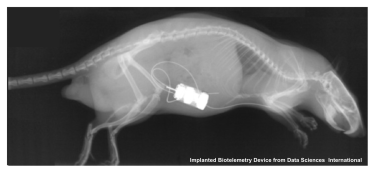
Our research program focuses on understanding:
- The impact of acute and chronic stressor exposure (mental and physical) on behavior, neural, hormonal, and immunological function
- How such systems interact to affect the whole organism
- The mechanisms of increased stress robustness (resistance/resilience) produced by exercise, prebiotics, and cannabis constituents
Personnel
- Laboratory Director: Professor Monika Fleshner, PhD
- Research Associate: Robert S. Thompson, PhD
- Laboratory Manager: Shelby Hopkins, B.A., Tel Kelley, B.A.
- Graduate Students: Shelby Hopkins, B.A., Tel Kelley, B.A., Tina Nguyen, B.A.
- Undergraduate Students: Lindsey Land, Jack Simone, Ava Whitlow
- Collaborators: Benjamin Greenwood, PhD, University of Colorado Denver; Nathaniel Greene, PhD, University of Colorado Denver; Catherine Lozupone, PhD, University of Colorado Denver; Michael Pecaut, PhD, Loma Linda University; Christopher Wilson, PhD, Loma Linda University; Ted Argo, PhD, Applied Research Associates Inc; Jonathan Mun, PhD, Pharmavite; Rob Knight, PhD, University of California San Diego; Pieter Dorrestein, PhD, University of California San Diego; Fred Turek, PhD, Northwestern University; Martha Vitaterna, PhD, Northwestern University; Samuel Bowers, MD/PhD, University of Michigan Medical School; Peter Clark, PhD, Iowa State University; Steven Maier, PhD, University of Colorado at Boulder; Linda Watkins, PhD, University of Colorado at Boulder; David Root, PhD, Unviersity of Colorado at Boulder; Kenneth Wright Jr., PhD, University of Colorado at Boulder; Matt Frank, PhD, University of Colorado at Boulder; Christopher DeSouza, PhD, University of Colorado at Boulder.
Diversity Statement
The University of Colorado Boulder and the Stress Physiology laboratory is committed to Diversity and Inclusive Excellence by the following:
- Creating a welcoming and inclusive environment
- Deepening our ability to share and to engage with diverse perspectives
- Maximizing the success and inclusion of all students, staff and faculty
Current Research Projects
Overview: Exposure to acute and chronic stressors (mental or physical) influences many aspects of physiology. This lab investigates the impact of exposure to stressors on neural, hormonal, and immunological function, and how these systems interact to influence the whole organism. The body's stress response is a powerful and wonderfully integrated series of responses that under normal conditions functions to facilitate fight/flight responses, restore homeostasis, and promote survival. If, however, the stressor is excessive or frequent, the response is inappropriate, or the organism suffers from other illnesses or vulnerabilities, the stress response can have negative health consequences. Current projects include:
- Stress and immunity: immune suppression/immune potentiation.
- Stress and immunity: impact of acute or chronic stressor exposure on sterile inflammatory processes. Potential impact on vascular function.
- Stress-buffering effects of exercise on central serotonin and autonomic neural circuits and behavior.
- Neurobiology of exercise: involvement of dopamine motivational circuits and changes in learning and memory processes.
- Stress and gut microbiota: investigation of the developmental impact of diet-induced changes on brain development; and how such changes could impact stress vulnerability and stress resistance.
Opportunities for Undergraduates
- Undergraduates play an important role in our research and gain valuable skills unobtainable through regular university courses alone.
- The requirements for undergraduate students who want a research experience in our Laboratory are:
- Have an understanding and acceptance of the use of animals in research.
- Successful completion of one course with bench top laboratory requirements.
- Enroll in independent study (IPHY 4860) for a minimum of 10 hours/week for at least one semester.
- Demonstrate maturity, commitment, and dependability.
- Sophomore undergraduates entering into the Junior year preferred, but all students are encouraged to apply.
- Must submit "unofficial" transcript, resume, and reason for interest in order to be considered.
- All accepted undergraduates will undergo a 1-2 month trial period prior to full acceptance into the lab as an undergraduate assistant.
- For consideration, please email Dr. Monika Fleshner (fleshner@colorado.edu) with appropriate materials.
Recent Publications
- Thompson, Thompson, RS; Hopkins, S; Kelley, T; Wilson, CW; Pecaut, M; Fleshner, M. A prebiotic diet containing galactooligosaccharides and polydextrose attenuates hypergravity-induced disruptions to the microbiome in female mice. Nutrients. 2025: (in press).
- Frank MG, Ball JB, Hopkins S, Kelley T, Kuzma AJ, Thompson RS, Fleshner M, Maier SF. SARS-CoV-2 S1 subunit produces a protracted priming of the neuroinflammatory, physiological, and behavioral responses to a remote immune challenge: A role for corticosteroids. Brain Behav Immun. 2024;121:87-103. Epub 20240721. doi: 10.1016/j.bbi.2024.07.034. PubMed PMID: 39043345.
- Thompson RS*, Bowers SJ, Vargas F, Hopkins S, Kelley T, Gonzalez A, Lowry CA, Dorrestein PC, Vitaterna MH, Turek FW, Knight R, Wright KP, Jr., Fleshner M. A Prebiotic Diet Containing Galactooligosaccharides and Polydextrose Produces Dynamic and Reproducible Changes in the Gut Microbial Ecosystem in Male Rats.Nutrients. 2024;16(11). Epub 20240606. doi: 10.3390/nu16111790. PubMed PMID: 38892722; PMCID: PMC11175065.
- Boruch AE, Barhorst EE, Rayne TJ, Roberge GA, Brukardt SM, Leitel ZT, Coe CL, Fleshner M, Falvo MJ, Cook DB, Lindheimer JB. Exercise does not cause post-exertional malaise in Veterans with Gulf War Illness: A randomized, controlled, dose-response, crossover study. Brain Behav Immun. 2024;120:221-30. Epub 20240520. doi: 10.1016/j.bbi.2024.05.026. PubMed PMID: 38777281.
- Mayer MP, Blair L, Blatch GL, Borges TJ, Chadli A, Chiosis G, de Thonel A, Dinkova-Kostova A, Ecroyd H, Edkins AL, Eguchi T, Fleshner M, Foley KP, Fragkostefanakis S, Gestwicki J, Goloubinoff P, Heritz JA, Heske CM, Hibshman JD, Joutsen J, Li W, Lynes M, Mendillo ML, Mivechi N, Mokoena F, Okusha Y, Prahlad V, Repasky E, Sannino S, Scalia F, Shalgi R, Sistonen L, Sontag E, van Oosten-Hawle P, Vihervaara A, Wickramaratne A, Wang SXY, Zininga T. Stress biology: Complexity and multifariousness in health and disease. Cell Stress Chaperones. 2024;29(1):143-57. Epub 20240203. doi: 10.1016/j.cstres.2024.01.006. PubMed PMID: 38311120; PMCID: PMC10939078.
- Seals DR, DeSouza CA, Enoka RM, Fleshner M, Mazzeo RS, Moore RL. Is it the people or the place? The remarkable 30-year period of integrative physiology research in the Carlson Gymnasium at the University of Colorado Boulder. Journal of Applied Physiology. 2024;137(1):42-50. Epub 20240606. doi: 10.1152/japplphysiol.00316.2024. PubMed PMID: 38841758.
- Bouchet, CA*; Fleshner, M (2024). Exercise Immunology and Interactions with Psychological Stress. published by Taylor Francis/Routledge 2nd Edition, eBook Published23 October 2024, London, Routledge, DOIhttps://doi.org/10.4324/9781003256991, ISBN9781003256991
- Buhr, TJ; Reed, CH; Wee, OM; Lee, JH; Yuan, LL; Fleshner, M., . . . Clark, PJ*. (2023). The persistence of stress-induced physical inactivity in rats: an investigation of central monoamine neurotransmitters and skeletal muscle oxidative stress. Front Behav Neurosci, 17, 1169151. doi:10.3389/fnbeh.2023.1169151.
- Hopkins, S*; Kelley, T; Roller, R; Thompson, RS; Colagiovanni, DB; Chupka, K; & Fleshner, M. (2023). Oral CBD-rich hemp extract modulates sterile inflammation in female and male rats. Front Physiol, 14, 1112906. doi:10.3389/fphys.2023.1112906.
- Frank, MG, Fleshner, M and Maier, SF. (2023). Exploring the immunogenic properties of SARS-CoV-2 structural proteins: PAMP:TLR signaling in the mediation of the neuroinflammatory and neurologic sequelae of COVID-19. Brain Behav Immun, (2023) 111: p. 259-269.
- Bowers, SJ; Summa, KC; Thompson, RS; González, A; Vargas, F; Olker, C; Jiang, P; Lowry, CA; Dorrestein, PC; Knight R; Wright, Jr KP; Fleshner, M; Turek, FW; Vitaterna, MV. A Prebiotic Diet Alters the Fecal Microbiome and Improves Sleep in Response to Sleep Disruption in Rats. Frontiers in Neuroscience (2022) DOI: 10.3389/fnins.2022.889211.
- Frank, MG; Nguyen, KH; Ball, JB; Hopkins, SL; Kelley, T; Fleshner, M; Maier, SF. SARS-CoV-2 spike S1 subunit induces neuroinflammatory, microglial and behavioral sickness responses: evidence of PAMP-like properties. Brain, Behavior, and Immunity (2022) DOI: 10.1016/j.bbi.2021.12.007.
- Thompson, RS; Gaffney, M; Hopkins, S; Kelley, T,; Gonzalez, A,; Bowers, SJ; Hotz Vitaterna, M; Turek, FW; Foxx, CL; Lowry, CA; Vargas, F; Dorrestein, PC; Wright, KP Jr; Knight, R; Fleshner, M., Ruminiclostridium 5, Parabacteroides distasonis, and bile acid profile are modulated by prebiotic diet and associate with facilitated sleep/clock realignment after chronic disruption of rhythms. Brain, Behavior, and Immunity (2021) doi.org/10.1016/j.bbi.2021.07.006.
- Foxx, CL; Heinze, JD; González, A; Vargas, FD; Baratta, MV; Elsayed, AI; Stewart, JR; Loupy, KM; Arnold, MR; Flux, MC; Sago, SA; Siebler, PH; Milton, LN; Lieb, MW; Hassell, JE; Smith, DG; Lee, KAK; Appiah, SA; Schaefer, EJ; Panitchpakdi, M; Sikora, NC; Weldon, KC; Stamper, CE; Schmidt, D; Duggan, DA; Nguyen, KT; Gates, CA; Schnabel, K; Vitaterna, MH; Turek, FW; Fleshner, M; Dorrestein, PC; Knight, R; Wright, KP; and Lowry, CA. Effects of Immunization With the Soil-Derived Bacterium Mycobacterium vaccae on Stress Coping Behaviors and Cognitive Performance in a “Two Hit” Stressor Model. Frontiers in Physiology (2020) 11, p. 524833, doi: 10.3389/fphys.2020.524833.
- Bowers, SJ; Vargas, F; Gonzalez, A; He, S; Jiang, P; Dorrestein, PC; Knight, R; Wright, KP, Jr.; Lowry, CA; Fleshner, M; Vitaterna, MH; Turek, FW. Immunization with a heat-killed bacterium, Mycobacterium vaccae NCTC 11659, prevents the development of cortical hyperarousal and a PTSD-like sleep phenotype after sleep disruption and acute stress in mice. Sleep (2020) doi:10.1093/sleep/zsaa271.
- Thompson, RS; Vargas, F; Dorrestein, PC; Chichlowski, M; Berg, BM; Fleshner, M. Dietary Prebiotics Alter Novel Microbial Dependent Fecal Metabolites That Improve Sleep. Sci Rep, (2020) 10(1): p. 3848.10.1038/s41598-020-60679-y.11131.
- Bowers, SJ; Vargas, F; Gonzalez, A; He, S; Jiang, P; Dorrestein, PC; Knight, R; Wright, KP, Jr.; Lowry, CA; Fleshner, M; Vitaterna, MH; Turek, FW. Repeated Sleep Disruption in Mice Leads to Persistent Shifts in the Fecal Microbiome and Metabolome. PLoS One, (2020) 15(2): p. e0229001.10.1371/journal.pone.0229001.11132.
- Arnold, MR; Greenwood, BN; McArthur, JA; Clark, PJ; Fleshner, M; Lowry, CA. Effects of Repeated Voluntary or Forced Exercise on Brainstem Serotonergic Systems in Rats. Behav Brain Res, (2020) 378: p. 112237.10.1016/j.bbr.2019.112237.11129.
- Fleshner, M. Bidirectional Gut-Microbial Mediated-Brain Signaling: A New Player in Stress Physiology? (Commentary on O'Mahony et al., 2019). Eur J Neurosci, (2020)52(5), 3487-3489. doi:10.1111.
- Sprecher, KE; Ritchie, HK; Burke, TM; Depner, CM; Smits, AN; Dorrestein, PC; Fleshner, M; Knight, R; Lowry, CA; Turek, FW; Vitaterna, MH; Wright, KP. Trait-Like Vulnerability of Higher-Order Cognition and Ability to Maintain Wakefulness During Combined Sleep Restriction and Circadian Misalignment. Sleep, (2019) 42(8).10.1093/sleep/zsz113.11128.
- Greenwood, BN; Fleshner, M. Voluntary wheel running: A useful rodent model for Investigating the mechanisms of stress robustness and neural circuits of exercise motivation. Current Opinion in Behavioral Sciences (2019) 28, p. 78-84 doi: 10.1016/j.cobeha.2019.02.001.
- Mika, A; Gaffney, M; Roller, R; Hills, A; Bouchet, CA; Hulen, KA; Thompson, RS; Chichlowski, M; Berg, BM; Fleshner, M. Feeding the Developing Brain: Juvenile Rats Fed Diet Rich in Prebiotics and Bioactive Milk Fractions Exhibit Reduced Anxiety-Related Behavior and Modified Gene Expression in Emotion Circuits. Neurosci Lett, (2018) 677: p. 103-109.10.1016/j.neulet.2018.01.052.
- Fleshner, M; Frank, MG; Watkins, LR; Maier, SF. Editorial: Danger-associated molecular patterns in health and disease. Brain, Behavior, and Immunity (2018) DOI: 10.1016/j.bbi.2018.06.022.
- Fleshner, M. and Crane, CR. Exosomes, DAMPs and miRNA: Features of stress physiology and immune homeostasis. Trends in Immunology, (2017) 38 p. 63 doi: 10.1016/j.it.2017.08.002.
- Thompson, RS; Roller, R; Greenwood, BN; Knight, R; Chichlowski, M; Berg, BM; Fleshner, M. Dietary prebiotics and bioactive milk fractions support early-life NREM sleep quality, REM rebound sleep recovery following acute stress and ameliorate stress-induced decrease in alpha diversity in the rat. Frontiers in Behavioral Neuroscience, (2017) 10, 10:240. doi: 10.3389/fnbeh.2016.00240.
- Lloyd, BA; Hake, HS; Ishiwata, T; Farmer, CE; Loetz, EC; Fleshner, M; Bland, ST; Greenwood, BN. Exercise Increases Mtor Signaling in Brain Regions Involved in Cognition and Emotional Behavior. Behav Brain Res, (2017) 323: p. 56-67.10.1016/j.bbr.2017.01.033.
- Fleshner, M; Frank, M; Maier, SF. Danger Signals and Inflammasomes: Stress-Evoked Sterile Inflammation in Mood Disorders. Neuropsychopharmacology, (2017) 42(1): p. 36-45.10.1038/npp.2016.125.
- Mika, A; Day, HE; Martinez, A; Rumian, NL; Greenwood, BN; Chichlowski, M; Berg, BM; Fleshner, M. Early Life Diets with Prebiotics and Bioactive Milk Fractions Attenuate the Impact of Stress on Learned Helplessness Behaviours and Alter Gene Expression within Neural Circuits Important for Stress Resistance. Eur J Neurosci, (2017) 45(3): p. 342-357.10.1111/ejn.13444.
PubMed
Google Scholar