

Non-perennial streamflow and sediment mobilization in a semi-arid rangeland slated for development
Our recent work on monitoring streamflow in semi-arid streams has helped extend our understanding of how streamflow is generated in these regions. Our study found that high rainfall intensities are a key factor in generating runoff during events, resulting in streamflow. Additionally, we found a correlation between streamflow and wet antecedent conditions for more moderate rainfall intensities.
Our analysis matched rainfall data with streamflow observations from trail cameras deployed across West Stroh Gulch in Parker, Colorado. During the study period between 2020 and 2023, we observed 115 rain events, of which only 32 led to streamflow.
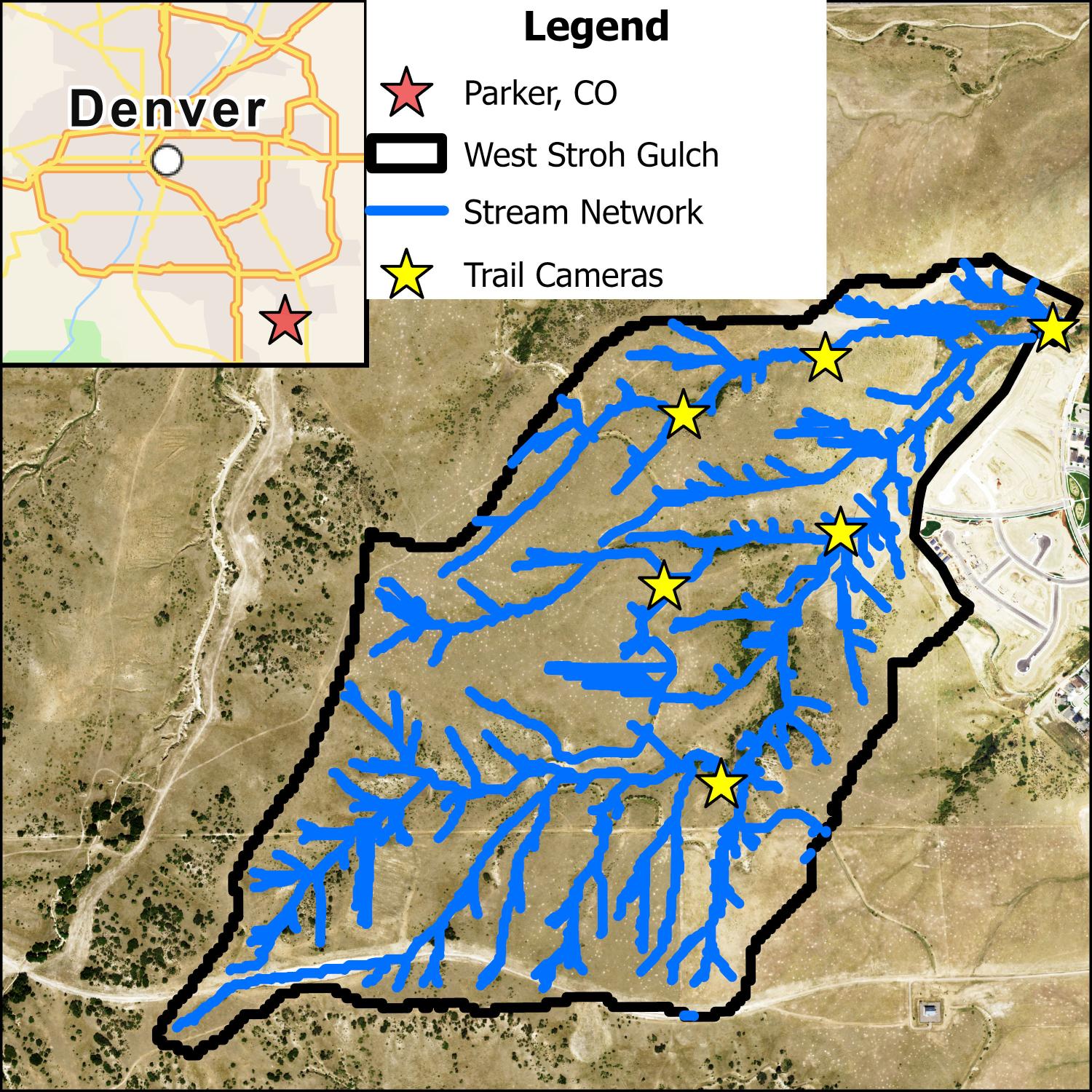

West Stroh Gulch location in Parker, CO and streamflow monitoring setup.
Next, using machine learning techniques, we identified key storm characteristics and antecedent conditions that predict streamflow. Our findings showed that when storm intensity exceeded 0.17 inches/hour and 0.8 inches of rain or more had fallen in the last 7 days, streamflow was produced approximately 90% of the time.
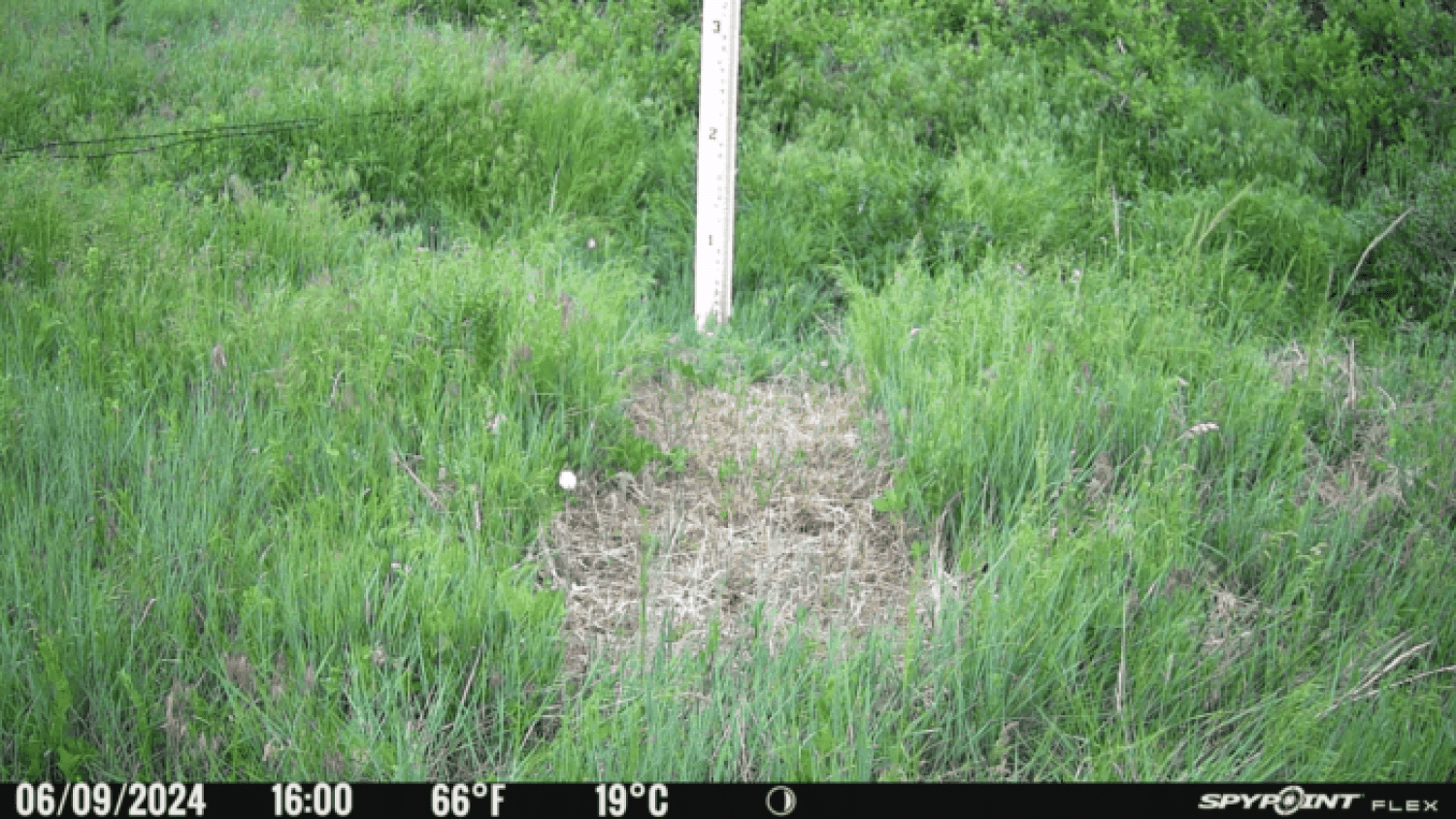
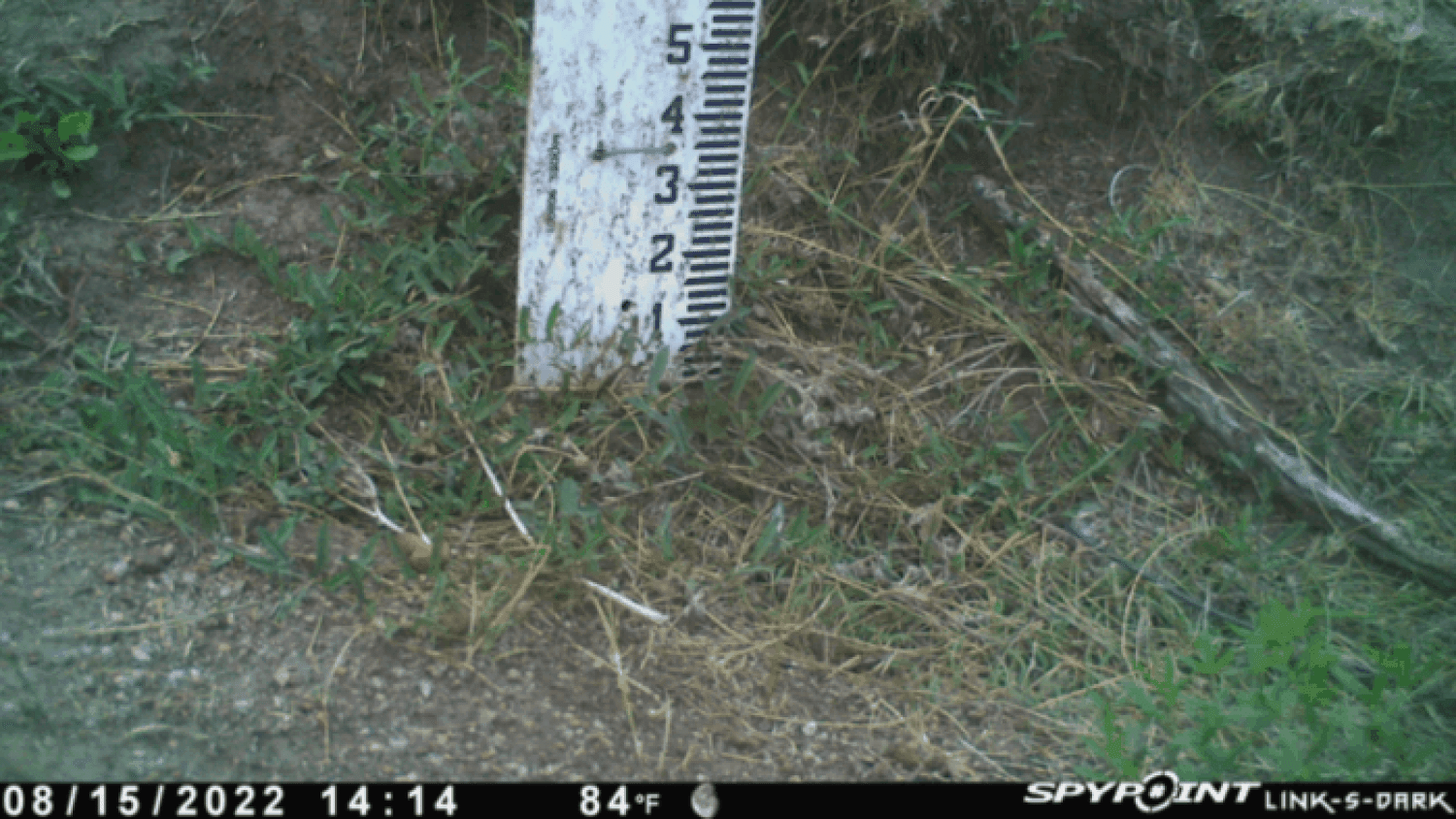
Examples of streamflow events captured by trail cameras.
Additionally, the study evaluated how the potential for erosion changes as streamflow is affected by urban development. Our findings showed that, for small storms, developments with stormwater storage infrastructure can reduce erosion compared with developments without any storage. However, for larger storms, no matter what stormwater management strategy is used, the erosion potential with greater streamflow remains high.
Overall, these findings support stormwater management practices for developing areas in semi-arid climates. It highlights drivers of streamflow through analysis of storm characteristics in combination with antecedent conditions, and cost-effective tools for monitoring streamflow in developing watersheds. Further, it informs potential for erosion in developing watersheds. Future research on the watershed will continue as development progresses.
For more information you can check the full article: Ramírez-Núñez JS, Poteet DL, Bhaskar AS, Wilson S, Morrison RR, et al. (2025) Non-perennial streamflow and sediment mobilization in a semi-arid rangeland slated for development. PLOS Water 4(11): e0000466. https://doi.org/10.1371/journal.pwat.0000466