


Leo Beck
- IRES 2025 Participant
- Graduate Student
- UNIVERSITY OF COLORADO BOULDER
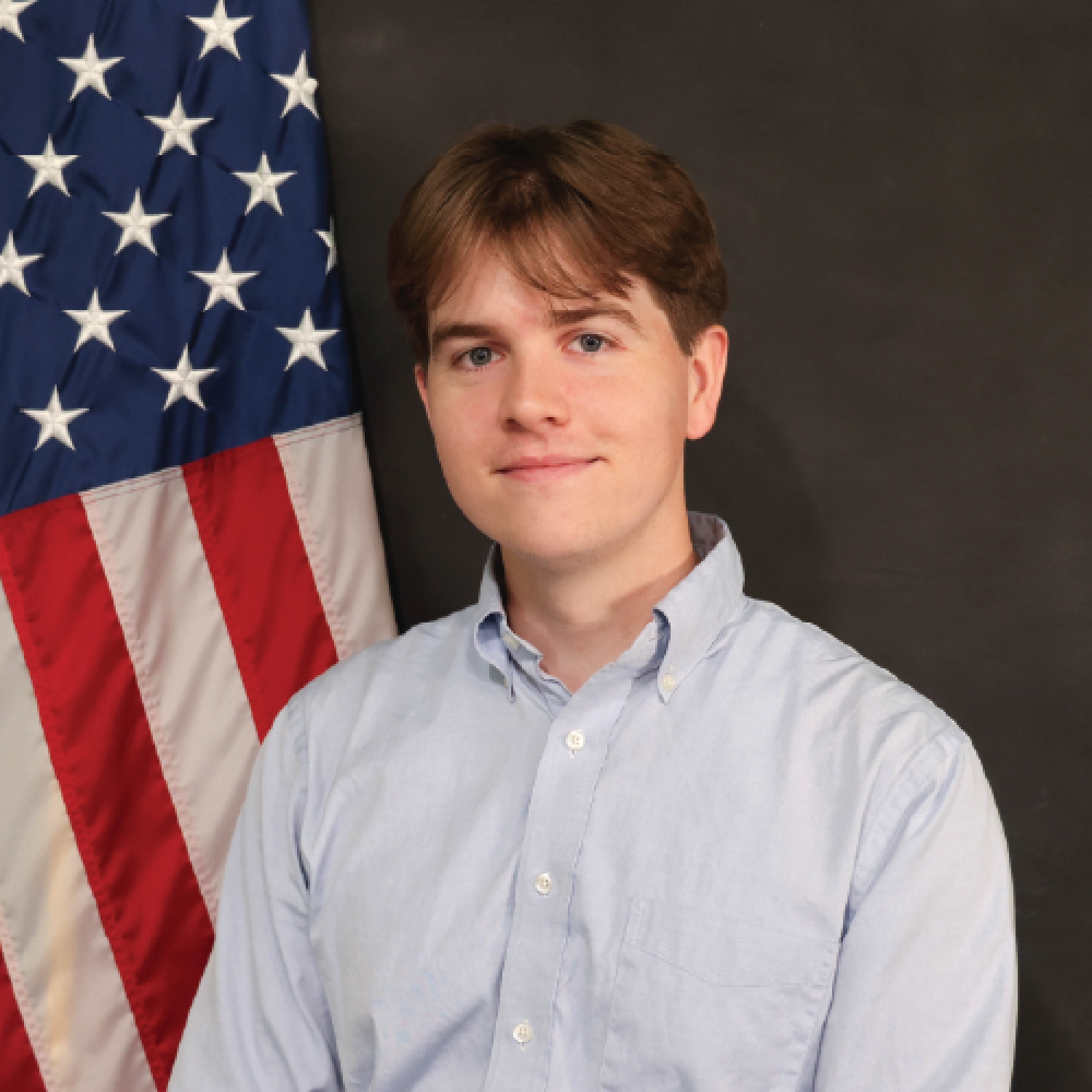
I am from Charlotte, NC, but have lived in both Carolinas throughout my life. I got my bachelors in materials science & engineering and mathematics at Clemson University. While there, I did research fabricating organic memristors, calculating point defect energies of high entropy alloys using DFT, and performing biobjective optimization of 4th order PDEs. Additionally, I was a member of Clemson’s Formula SAE team for 4 years.
I recently received my masters in materials science & engineering from CU Boulder. I am continuing as a PhD student in the materials science & engineering program in Prof. Hendrik Heinz’s lab at CU Boulder. My research is primarily focused on using molecular dynamics (specifically the Interface Force Field) to simulate semiconductor materials.
My main project is running LAMMPS simulations to calculate formation energies and key structural descriptors on hybrid organic inorganic perovskites (HOIPs). In particular, I am looking into various 1D, 2D, and quasi-2D HOIPs formed with halogenated versions of alpha-methylbenzylammonium as the organic molecule.
The second project I am working on involves running NAMD simulations to determine binding energies and binding mechanisms of protonated dopamine on the surface of MXene sheets. In my free time, I like to hike / trail run, climb, read, and play games with friends.
Graduate Advisor: Hendrik Heinz (University of Colorado Boulder)
IRES-Perovskites Host: Claudia Draxl (Humboldt Universität Berlin)
Extended Functionality of the LAMMPS Parser for NOMAD
Perovskite solar cell research is bottlenecked by the large number of potential chemistries and structures. Applying machine learning models to existing photovoltaic data is made more difficult by the lack of data from a wide variety of sources in consistent formats within one location. NOMAD aims to combine experimental and computational data into one database, providing researchers with a single location for a variety of photovoltaic data. The parser for LAMMPS simulations is incomplete due to the large number of formats that the software can have as inputs and outputs. This project focused on extending the capabilities of the LAMMPS parser so that researchers can upload their simulation data without any modifications or reformatting. Through this work, we were able to increase the number of input and output formats correctly handled by the parser.