

Sicyon
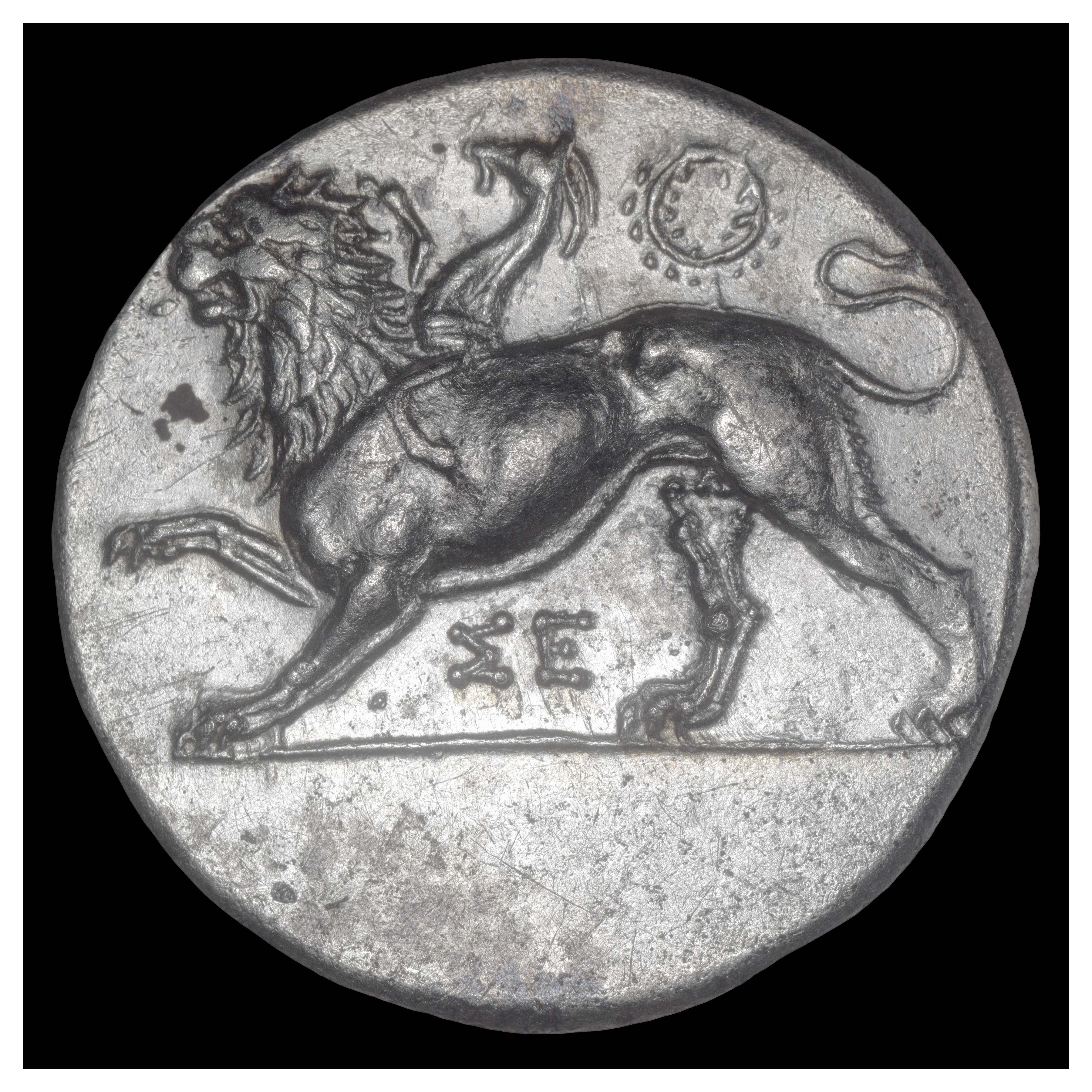

Figure 1. Silver Stater, Sicyon, 330 BCE (Nebel Collection)
Historical Overview
The ancient Greek city of Sicyon is situated in the northern Peloponnese between Achaea in the west and Corinthia in the east (Lolos 2025, 7). According to Aristotle’s Politics (Pol. 1315b12), the city had the longest tyrannical regime in history (lasting about a century), known as the Orthagorid Tyranny (Lolos 2025, 193, 229). Both Pausanias and Castor of Rhodes suggested that Sicyon was ruled by hereditary kingships prior to the takeover by Orthagoras in the mid-7th century BCE (who Diodorus Siculus in Bibliotheca Historica 8.24 identified as the founder of the city) (Lolos 2025, 224-226).

Map of ancient sites in the northeastern Peloponnese (map from Lolos 2025, Map 2.2., 195).
The Orthagorid tyrant, Kleisthenes (ruled 600-570 BCE), is notable in Sicyonian history for a couple of reasons. First, ancient authors state his reign was more violent than his predecessors. Second, he was the grandfather of the Athenian statesman, Kleisthenes, renowned for his democratic political reforms beginning around 508 BCE (Lolos 2025, 227; Osborne 2018, 8-9). In the mid-to-late 6th century BCE, the last tyrant of Sicyon, Aeschines, was overthrown by the Spartans. Thereafter, the city was controlled by pro-Spartan oligarchies in a similar manner to Corinth (Lolos 2025, 227-229) and became an important ally of Sparta through its participation in the Peloponnesian League (Lolos 2025, 244-245).
Economic Overview
The fertile coastal plain of Sicyon provided it with great natural resources, which were major contributors to the city’s wealth, especially in the 6th and 5th centuries BCE. A comic poet, Antiphanes, of the fourth-century BCE claims the Sicyonians were known for their fish—specifically, the conger eel (“goggros”) (Lolos 2025, 245-246). Lolos identified three conglomerate stone quarries in the countryside of Sicyonia, as well as 70 additional distinguishable areas of stone extraction (Lolos 2025, 246). Cypress wood was also an important natural resource. Reports show that in the fourth century BCE cypress wood was exported to Delphi (Lolos 2025, 246-247).
Sicyonian Silver Coin Production
The initiation of silver coinage in Sicyon likely took place in the first years of the 5th century BCE (the dates 500-494 BCE were proposed by Warren 2009, 5; Lolos 2025, 248-250). The early silver denominations include the drachma, as well as smaller fractions including hemiobols, quarter obols, and a single one-eighth obolos, which were minted on the Aeginetan standard (Lolos 2025, 248-250; Warren 2009, 5).
The earliest issues of Sicyonian coinage belong to the “first group” proposed by Warren. The iconography of the first group shows a dove on the obverse and the letter “san” (later replaced by a sigma) inside an incuse square on the reverse, with a grape bunch in the center of the letter (See Lolos 2025, fig. 2.6., p. 249). The dove symbolizes the city’s local cult worship of the goddess, Aphrodite (Warren 2009, 3).

Figure 2. Silver Drachma, Sicyon, 420-400 BCE. CUAM 2014.06.151.

A Sicyonian silver drachma (Fig. 2) in the CU Art Museum's collection (2014.06.151) shows the “second group” of Sicyonian coinage proposed by Warren (Warren 2009, pl. 1, no. 6): the Chimera is on the obverse and the dove on the reverse. The Chimera is a Greek mythological hybrid creature with a lion’s body, protruding goat’s head, and a snake’s tail (Warren 2009, 7). Warren identifies this Chimera as the “aggressive type” (Warren 2009, pl. 1, no. 6), which this CUAM coin exemplifies.
Warren asserts the Sicyonian’s selection of the Chimera is uncertain. In Greek mythology, Chimera lived in Lycia and was killed by Bellerophon with the help of Pegasus (Davis 1967, No. 7, p. 40). The image might have been apotropaic, used as a protective device against external threats of neighboring Greek poleis. Or Chimera may be an emblem of the geographic location of Sicyon: in mythology, Chimera was the child of the Nemean Lion and the Hydra of Lerna, which were the adjoining territories of Sicyon (Davis 1967, 40).

Figure 3. Silver Stater, Sicyon, 430-390 BCE. CUAM 2014.06.150.

The iconography on late 5th century BCE Sicyonian silver issues did not change, except for the addition of an olive-wreath surrounding the dove on the reverse (Warren 2009, pl. 1, nos. 15, 18). The Sicyonian silver stater (Fig. 1) from Nebel's collection and a silver stater (Fig. 3) in the CUAM's collection (2014.06.150) shows the olive wreath on the reverse. Warren identifies this iconographic shift as the “third group” of Sicyonian coinage, which like the second group, features the “aggressive type” Chimera on the obverse (Fig. 2). Sicyon also issued rare staters depicting the Nemean Lion on the obverse (Warren 2009, 10, pl. 1, no. 16).
Sicyonian Bronze Coinage

Figure 4. Bronze Coin, Sicyon, before 146 BCE. CUAM 2014.06.152.

In 303 BCE, Demetrius Poliorcetes of Macedon sacked Sicyon. He moved the inhabitants to the acropolis and built the new city there (Davis 1967, 40). Sicyonian bronze issues picture the head of Apollo wearing a laurel crown on the obverse and a dove on the reverse with the letter ‘Σ’ (‘S’). The bronze coin (Fig. 4) in the CUAM’s collection (2014.06.152) depicts the head of Apollo on the obverse and a flying dove on the reverse. Unlike later issues of silver coinage (Figs. 1, 3), the reverse of the bronze coin here (Fig. 4) does not show an olive wreath. The addition of Apollo on the obverse of Sicyonian bronze coinage may correspond to the worship of Apollo in the city. An Archaic temple of Apollo from the 6th century BCE was discovered underneath the Hellenistic and Roman agora of Demetrius’ “new” city, demonstrating the worship of Apollo long preceded his appearance on Sicyonian coinage (Lolos 2025, 254).
Worship of the god, Apollo, at Sikyon is attested as early as the 6th century BCE, evidenced by an Archaic temple underneath the Hellenistic and Roman agora. It is possible Apollo was the patron deity of Sicyon, just as in the neighboring city of Corinth (Lolos 2025, 254). There was an annual festival of Apollo with a processional ritual specific to the history of Sicyon. Seven girls and seven boys processed to the Sythas river, the western boundary of the city, and back to the agora, as a reenactment of the original mission to appease Apollo and Artemis (Paus. 2.7.7-8).
Summary
The iconography of Sicyonian coinage was relatively consistent throughout the 5th century BCE and first half of the 4th century BCE with the exception of the added olive wreath around the dove on the reverse side of the coins (Figs. 1, 3) in the last quarter of the 5th century BCE. The bronze coins, commissioned by Demetrius Poliorcetes, keep the dove on the reverse and they the head of Apollo on the obverse instead of Chimaera (as seen on silver issues). The image of Apollo may refer to his local worship in the city.
Bibliography
Davis, Norman. 1967. Greek Coins & Cities. London: Spink & Son Ltd.
Lolos, Yannis A. 2011. Land of Sikyon: Archaeology and History of a Greek City-State. New Jersey: The American School of Classical Studies at Athens.
Lolos, Yannis. 2025. “Sicyon.” In The Oxford History of the Archaic Greek World: Volume VI: Rhodes to Western Sicily, edited by Paul Cartledge and Paul Christesen, 191-271. Oxford: Oxford University Press.
Osborne, Robin. 2018. The Transformation of Athens: Painted Pottery and the Creation of Classical Greece. Princeton: Princeton University Press.
Warren, J.A.W. 2009. “Sikyon: a Case-Study in the Adoption of Coinage by a Polis in the Fifth Century.” The Numismatic Chronicle 169: 1-13.