

blackwell
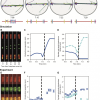 Our paper "Mechanisms of chromosome biorientation and bipolar spindle assembly analyzed by computational modeling" was published in the Feb 13, 2020 edition of eLife today.
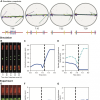 Our paper "Mechanisms of chromosome biorientation and bipolar spindle assembly analyzed by computational modeling" was posted on the bioRxiv server.
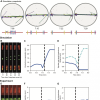 We develop a computational model of fission-yeast mitosis using a course-grained Brownian Dynamic framework in conjunction with a force-dependent kinetic Monte Carlo algorithm to replicate the biorientation and segregation of chromosomes.
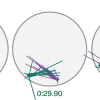 Our collaborative paper with Phong Tran's lab, "Kinesin-5-independent mitotic spindle assembly requires the antiparallel microtubule crosslinker Ase1 in fission yeast," was published by Nature Communications.
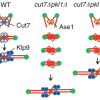 Pushing forces generated by microtubule polymerization are sufficient to promote spindle pole separation and the assembly of bipolar spindle in the absence of molecular motors.
 Alum Robert Blackwell has received a Humboldt Research Fellowship for his postdoctoral work in Germany.
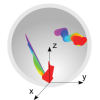 Our paper "Contributions of microtubule dynamic instability and rotational diffusion to kinetochore capture" was published in final form today by the Biophysical Journal and highlighted on the Biophysical Journal website.
 Robert Blackwell has been awarded the 2016 Award for Outstanding Doctoral Thesis Research in Biological Physics by the American Physical Society.
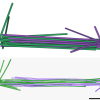 Robert Blackwell's paper "Physical determinants of bipolar mitotic spindle assembly and stability in fission yeast" was published by Science Advances.
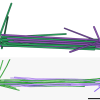 Microtubules, motors, and cross-linkers are important for bipolarity, but the mechanisms necessary and sufficient for spindle assembly remain unknown. We describe a physical model that exhibits de novo bipolar spindle formation.