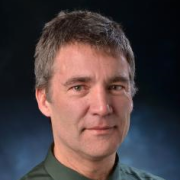
| Instructor | Prof. Joe Ryan office: Engineering Center OT 517 phone: 303 492 0772 email: joseph.ryan@colorado.edu web: http://www.colorado.edu/ceae/environmental/ryan/
|
![]() |
| Course Description |
CVEN 3454 is a four-credit lecture and lab course. CVEN
5404 is a three-credit lecture and laboratory course. In both courses,
we'll study both the theory and practice of water chemistry.
Undergraduates and graduates will do the same work for this course;
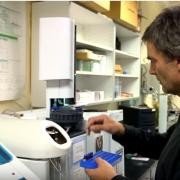
undergraduates earn one more credit hour. In the lectures, I'll present chemistry concepts for natural and treated waters. We'll spend some time solving simple versions of problems you'll see in the problem sets. I'll also spend some time explaining the analytical methods that we'll use in the lab. To help you absorb the material and to hone your problem-solving skills, I'll assign problem sets. You'll have one week to complete each problem set. Graduate students in CVEN 5404 will get an extra problem related to a research problem. The problem sets will be graded by the TA. Solution sets will be available after the due date on the course web site. In the laboratory, you'll form teams of three students to perform a series of assigned experiments designed to illustrate the concepts presented in lecture and to study the chemistry of some local waters. To improve your writing skills, your lab group will complete reports describing the results for each of the labs, and you'll be given the opportunity to re-write each lab report. The instructor will grade the lab reports. Guidelines and examples will be available on the web. Finally, to test your comprehension of the concepts, I'll also give each class three open-book exams, all take-home exams.
|
|
| Course Objectives | 1. Understand the basic concepts of aquatic
chemistry; 2. Apply some of the basic analytical techniques of aquatic chemistry; 3. Develop the ability to collect and critically evaluate data using statistical techniques; 4. Communicate by writing clearly and concisely; 5. Work effectively as teams.
|
|
| Prerequisites | To take CVEN
3454 or CVEN 5404, you need
a year of general chemistry. For most of the engineers taking this course,
one year of general chemistry is compressed into the one-semester course, CHEM
1211 General Chemistry for Engineers. Students pursuing the
Civil Engineering and Environmental Engineering B.S. degrees should have already
taken CVEN
3414 Introduction to Environmental Engineering, but CVEN 3414 is not a
prerequisite for this course.
|
|
| What to Expect | I believe that the best
way to educate yourself in water chemistry is to practice doing problems
and writing up labs -- a lot. When you finish this class, you will feel satisfied
that you have learned water chemistry, enough to use water chemistry as a
practicing engineer and enough to go on to graduate school in
environmental engineering. You can see from the FCQ results available over the past few years that this course is considered difficult (average work load of 6.9 on the 1-9 scale). It's a four-credit class, so it should be more work that most of your other classes, but there's more to it than that. As you can also see from the FCQ results, the average course and instructor grades for this class are B and A-, respectively -- students have recognized that the hard work it takes to succeed in this class is worth it.
|
|
| Course Text |
Water Chemistry, Mark M. Benjamin, McGraw-Hill, 2002. This book effectively conveys the key concepts of equilibrium chemistry, particularly as they apply to natural and engineered aquatic systems. The coverage is rigorous and thorough, but the author assumes little prior knowledge of chemistry on the part of the readers, and writes in a style that is easily accessible to students. This book is the only one that presents solutions to equilibrium speciation problems by the two main methods of solving these problems, the "proton condition" approach and the "tableau," or TOTH, method. The author is a Professor of Civil and Environmental Engineering at the University of Washington in Seattle. |
![]() |
| Communication | Problem sets, exams, solutions, and lab
handouts will be will be posted on this web site. I'll also use the web page for general
notices. I'll use e-mail for unexpected changes in problem set
questions and other time-sensitive notices. Lectures will usually be available for downloading on the Schedule page by noon on the day of each class as Microsoft PowerPoint files (*.ppt). They can be viewed by (1) left-clicking on the lecture entry on a computer with PowerPoint loaded or (2) downloading the files (right-clicking) to a disk on a computer for viewing on another computer with PowerPoint. I will provide handouts in PowerPoint "notes" format (four slides per page) for each lecture; if you want more room on each page for notes, you can print out the lectures before class. Problem sets, laboratory handouts, and exams will be provided on Schedule page as html documents. Problem set and exam solutions will be provided on the Schedule page as pdf documents.
|
|
| Grading |
Problem
Sets (9, 3 points each, 27 points total) Laboratory Reports
(6, 4 points each, 24 points total) Exams (35 points
total) My grading philosophy
is based on achievement and effort. I believe that everyone taking
this course should make a sincere and dedicated effort to learn the
material. I believe that you will become competent in aquatic
chemistry if you make this effort. Some students will be more
interested in or better prepared for the subject, and these students will
likely achieve more than just competency -- they will achieve a higher
level of understanding that usually shows on some of the more difficult
questions asked on the exams, or on more in-depth writing for the
laboratory reports.
|
|
| University Policies |
Students with disabilities will be accommodated
in class following University
policy. Students with conflicts between religious observance dates and course examinations or assignments may request a change in the course schedule following University policy. Inappropriate and disruptive class room behavior will be dealt with following University policy. Breaches of academic integrity will be dealt with following University policy. Discrimination or sexual harassment will be addressed following University policy.
|
|
Last updated on August 22, 2010 at 08:42 PM by Joe Ryan