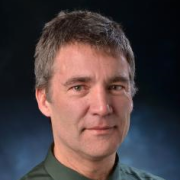
| Instructor | Prof. Joe Ryan office: Engineering Center OT 517 phone: 303 492 0772 email: joseph.ryan@colorado.edu web: http://www.colorado.edu/ceae/environmental/ryan/
|
|
| Course Description |
CVEN 3414 is a three-credit lecture, problem
set, and exam course. In this course,
we'll cover the fundamentals of environmental engineering. These
fundamentals will serve you well as a future environmental engineer, a
future civil engineer, or in any profession in which the environment is a
concern. In the lectures, I'll present concepts and applications spanning the whole range of environmental engineering. We'll spend time solving simple versions of problems you'll see in the problem sets. To help you absorb the material and to hone your problem-solving skills, I'll assign problem sets. You'll have one week to complete each problem set. The problem sets will be graded by the teaching assistants. Solution sets will be available after the due date on the course web site. Finally, to test your comprehension of the concepts, I'll also give each class three exams.
|
|
| Course Objectives | 1. Understand the basic concepts of
environmental engineering; and 2. Solve environmental engineering problems.
|
|
| Prerequisites | To take CVEN
3414, you need
a year of general chemistry (for most of the engineers taking this course,
one year of general chemistry is compressed into the one-semester CHEM
1211 General Chemistry for Engineers). You should also be taking or have taken APPM 1360 Calculus 2.
|
|
| What to Expect | I believe that the best
way to educate yourself is to practice -- and for this class, that means
doing problems. When you finish this class, you will feel satisfied
that you have learned environmental engineering, enough to progress on to
further higher-level courses in environmental engineering or enough to
understand the role of environmental engineering in your chosen field. This is the second time I have taught CVEN 3414. You can look up my FCQ results for CVEN 3414 for Spring 2007.
|
|
| Course Text | Principles of Environmental
Engineering and Science Mackenzie L. Davis and Susan J. Masten 2004 (1st Edition) McGraw-Hill Publishing ISBN 0-07-235053-9
|
|
| Communication | Lectures (.ppt
files), problem sets and exams (.htm files), and their solutions (.pdf
files) will be posted on the schedule page on
this web site. I'll also use the web page for general
notices, extra materials, and useful web links. Lectures will usually be available by about 10 am on the day of the class. You may want to print them out before class to take notes on the slides. I'll use e-mail for unexpected changes in problem set questions and other time-sensitive notices. On the CULearn web site for the class, we'll have a Discussion link for problem set questions and answers -- basically virtual office hours. The CULearn web site will also be available for monitoring your grades.
|
|
| Grading |
Problem
Sets (55 points total) Exams (100 points
total) My grading philosophy
is based mainly on achievement, but effort also counts. Everyone taking
this course should make a sincere and dedicated effort to learn the
material. If you make the effort, you will learn the material and be
competent in environmental engineering. Some students will be more
interested in or better prepared for the subject, and these students will
likely achieve more than just competency -- they will achieve a higher
level of understanding that usually shows on some of the more difficult
questions asked on the exams.
|
|
| University Policies |
Students with disabilities will be accommodated in class following University policy. Students with conflicts between religious observance dates and course examinations or assignments may request a change in the course schedule following University policy. Inappropriate and disruptive class room behavior will be dealt with following University policy. Breaches of academic integrity will be dealt with following University policy. Discrimination or sexual harassment will be addressed following University policy.
|
|